Embroidering Support: A Designer's Review of the Person on Crutches Design
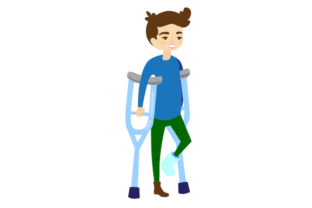
When I first opened the Person on Crutches embroidery file, my immediate thought wasn't about stitches or file formats. It was about a friend who had a recent surgery. This design has a very specific, and surprisingly powerful, mood. It’s not clinical or cold; the silhouette feels human and quietly resilient. For an embroidery designer, that’s a valuable starting point. It’s a design that speaks to empathy, recovery, and support, rather than just a medical symbol.
The Natural Fit: Where This Design Lives in the Real World
This isn’t a design you'd throw onto every product. Its strength lies in its context. I envision it working beautifully for a thoughtful, personalized gift. Imagine a custom tote bag for someone navigating a temporary injury, filled with books and snacks. Or a softly embroidered patch on a cozy blanket, a subtle reminder of care. I’ve considered it for the corner of a pillow cover in a recovery room, or as a small, meaningful detail on a comforting sweatshirt.
For craft businesses and Etsy sellers, this opens a niche. Beyond gifts, it could be a thoughtful element on aprons for physical therapy clinics, or a simple, recognizable logo for small businesses in the wellness space. The transparent PNG and SVG files are great here—they allow for clean digital mockups to show potential customers how the design would look on a dark or light fabric background before you stitch a single thread.
Stitching It Out: Practical Considerations for Your Project
The silhouette is relatively open, which is a good sign for stitch clarity. There aren’t overly dense areas that could become bulky or cause puckering, especially on stretchy fabrics like t-shirts. However, the crutch details and the person's form have some fine lines. On textured fabrics like some blanket materials, or on curved surfaces like caps, you’ll need to be mindful.
My standard advice applies strongly here: always test on scrap fabric first. Use a proper stabilizer suited to your final fabric. Check your thread color contrast—this design likely relies on a clear silhouette, so a strong contrast between thread and fabric will be key for visual appeal and professionalism. For dark fabrics, you might consider a slightly lighter thread shade to ensure the design doesn’t get lost.
Because the theme is so specific, its impact on customer trust and product value is high when used appropriately. A beautifully executed Person on Crutches embroidery on a gift item feels considered and heartfelt, enhancing its giftability and the perceived care behind your handmade product. For a commercial project, it adds a layer of recognition and thoughtful branding.
Careful Placement: When to Proceed with Caution
I’d be cautious with very small hoop sizes. Those finer details—the crutch handles, the suggested leg—might lose their clarity if minimized too much. Also, on fabrics that are very thin or prone to frequent washing, the integrity of those finer lines could be a concern over time. It’s not a design I’d recommend for tiny lettering integration or as a crowded decorative accent among other dense elements. Let it breathe on the product.
For apparel decorators, consider placement carefully on layered garments like jackets. You want a relatively flat area for the best stitching result. The design’s visual personality is simple and direct, so it doesn’t need a complex background to stand out. In fact, a clean, spacious placement often makes it more powerful.
A Note for Digital Product Sellers and Creative Entrepreneurs
You receive this design in multiple formats—SVG, Transparent PNG, EPS, DXF. This is excellent for versatility. The SVG and transparent PNG are particularly useful for creating printable mockups and previews for your customers. They allow you to showcase the design on various product images without doing the physical embroidery first. However, a crucial step: always confirm the licensing terms before selling the design itself as a digital product or using it commercially on finished items you sell. The provided formats are assets, but the rights to resell or bundle them need clear verification.
For machine embroidery, the file compatibility will depend on your specific software and machine. The included formats are standard, but you’ll need to check their import and conversion for your setup. Think about stitch density as you convert or use the file—aim to preserve those clean lines without over-saturating the area with fills.
The Final Impression: A Design with Purpose
Reviewing the Person on Crutches design from a maker’s perspective, it’s a specialized but meaningful asset. It won’t be your most frequently used file, but when the right project comes along—a custom apparel request for a support group, a personalized gift for a recovering friend, a simple branded item for a healthcare craft business—it will be perfect. Its value isn’t in broad appeal, but in deep relevance. It stitches a message of care, which, in the world of handmade products and personalized gifts, is a powerful thing to embed in your work.
So, keep this design in your library. When that real-life scenario emerges, you’ll have a thoughtful, well-executed option ready to go. Test it, stitch it with intention, and place it where its quiet, supportive mood can truly shine.